Keynote Speakers
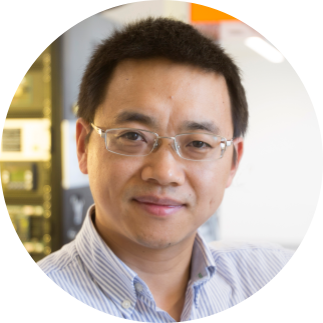
Prof. Daoyi Dong (IEEE Fellow, ARC Future Fellow)
University of Technology Sydney, Australia
Speech Title: Several results on quantum machine learning
Abstract: In this talk, we will introduce several results on quantum machine learning. Firstly, we will give overview of quantum machine learning. Secondly, we introduce the area of quantum reinforcement learning. Thirdly, we introduce an efficient parameter initialization strategy with theoretical guarantees to enhance the trainability of parameterized quantum circuits. Lastly, we show that noises may make quantum kernel methods to only have poor prediction capability.
Biography: Daoyi Dong (Fellow, IEEE) is currently a Professor and an ARC Future Fellow at the Australian Artificial Intelligence Institute, University of Technology Sydney, Australia and an Honorary Professor at the Australian National University. His research interests include machine learning, quantum estimation and quantum control. Prof. Dong was awarded an ACA Temasek Young Educator Award by The Asian Control Association and is a recipient of a Future Fellowship, an International Collaboration Award and an Australian Post-Doctoral Fellowship from the Australian Research Council, and a Humboldt Research Fellowship from the Alexander von Humboldt Foundation of Germany. He is a Vice President of IEEE Systems, Man and Cybernetics Society, and a member of Board of Governors, IEEE Control Systems Society. He is currently an Associate Editor of Automatica and IEEE Transactions on Cybernetics. He is a Fellow of the IEEE, and a Fellow of the Australian Institute of Physics.
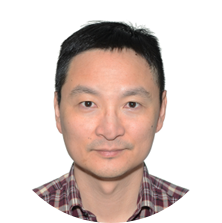
Prof. Pin-Han Ho (IEEE Fellow, AAIA Fellow)
University of Waterloo, Canada
Speech Title: Observation-Driven World Models for Embodied Edge AI
Abstract: Embodied edge AI systems are increasingly expected to perceive, reason, and act in open, dynamic, and partially observable environments. However, current AI architectures often treat sensing as a passive front-end and world modeling as a downstream learning problem. This separation overlooks a fundamental constraint: an intelligent agent can only model what its observation process makes distinguishable. This keynote introduces an observation-driven view of embodied edge AI, organized around a five-layer stack: physical sensing, wireless observations, tokens, world models, and belief update.
The first layer, physical sensing, emphasizes that sensing actions should be designed for identifiability, not merely for coverage or aggregate information gain. The second layer, wireless observations, argues that RF evidence must preserve acquisition context, including beam, frequency, waveform, pose, reliability, cost, and time. The third layer, tokens, frames observation tokenization as the interface between raw sensing and AI reasoning, where uncertainty, support, metadata, semantics, and lifecycle information must remain explicit. The fourth layer, world models, introduces the observable quotient perspective: world models should preserve distinctions justified by sensing actions while suppressing nuisance variation and unsupported latent hallucinations. The fifth layer, belief update, closes the loop by selecting future sensing actions that reduce meaningful uncertainty over observable world states.
Together, these layers shift embodied AI from passive perception toward active knowledge refinement. The central message is that better embodied intelligence does not come only from scaling reasoning models; it also requires designing what can be observed, how observations are tokenized, what world states are maintained, and which actions should be taken next. This observation-driven framework provides a conceptual foundation for wireless sensing, semantic token interfaces, quotient world models, and active belief-driven edge intelligence.
Biography: Pin-Han Ho is an IEEE Fellow. He takes a full Professor position in Shenzhen Institute for Advanced Study, UESTC, and the Department of Electrical and Computer Engineering at the University of Waterloo, Canada. Prof. Ho is internationally recognized for his pioneering contributions to optical backbone networks, wireless communications, and the Internet of Things. His research interests span survivable network design, AI-driven networking, fiber-wireless (FiWi) integration, broadband access, unmanned aerial vehicles (UAVs), and cyber-physical systems. In 2019, he was elevated to IEEE Fellow for his outstanding work in optical network failure restoration—a testament to his lasting impact on resilient telecommunications infrastructure. He is also a co-inventor of the Wireless Media Express (WMX) technology and has authored numerous highly cited papers that have shaped modern network architectures. Throughout his career, Prof. Ho has bridged theoretical innovation with practical applications, advancing both the robustness and intelligence of next-generation information AI systems. His work continues to influence emerging areas such as Physical AI,embodied intelligence, and Integrated Sensing and Communication (ISAC).
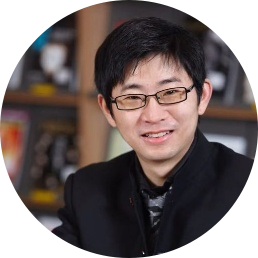
South China University of Technology, China
Speech Title: HongWU: Hierarchical On-demand Cognitive Big Model with World Utility
Abstract: This talk introduces HongWU (Hierarchical On-demand Machine-Cognitive Model with World Utility), a unified cognitive framework designed to address fundamental bottlenecks facing contemporary large-scale models: training data depletion, insufficient alignment with human intent, and inadequate grounding in physical systems. The HongWU framework integrates physical models, multi-source data, and intelligent tools into a unified tool matrix orchestrated by the foundation model. Through parameter-efficient Fine-tuning and Human-in-the-loop feedback, the model dynamically aligns its objectives with human needs. Its federated knowledge engine, multi-level spatiotemporal reasoning, and multi-agent workflow ensure physically consistent reasoning and enable scalable management of complex engineering systems.
Biography: Professor Min Chen is a Professor and Doctoral Supervisor at the School of Computer Science, South China University of Technology. He is an IEEE Fellow, IET Fellow, and AAA Fellow, serving as Chief Scientist of a National Key Research and Development Programme. Professor Chen has been named a Clarivate Highly Cited Researcher for eight consecutive years (2018–2025). With over 56,000 citations on Google Scholar and an H-index of 104, his academic influence is globally recognized. He has published more than 200 papers in top venues including Science, Nature Communications, and CCF Class A conferences, with 34 ESI Highly Cited Papers and a single paper cited over 6,060 times. He got IEEE ICC Best Paper Award in 2012, IEEE Communications Society Fred W. Ellersick Prize in 2017, the IEEE Jack Neubauer Memorial Award in 2019, and IEEE ComSoc APB Oustanding Paper Award in 2022. His research focuses on cognitive computing, Large Language Model, big data analytics, Embodied AI, and edge intelligence, etc.